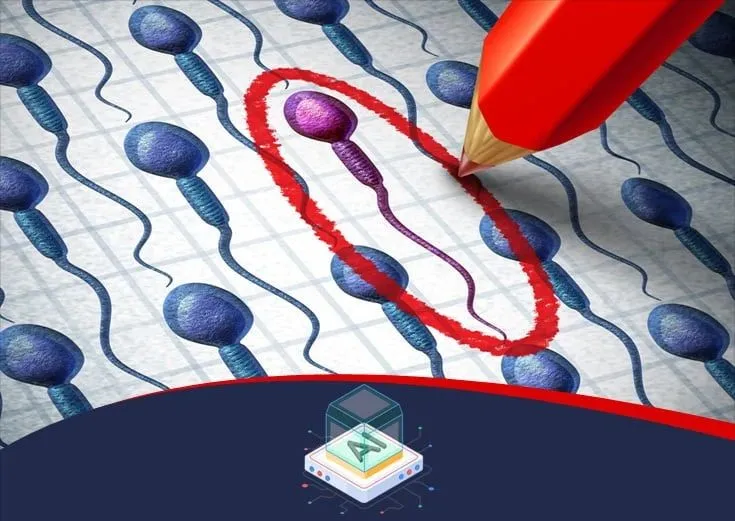
The paper introduced herein proposes a deep learning-based automatic identification system that predicts whether sperm have zona pellucida (ZP)-binding capability by analyzing morphological features of sperm images, independent of the WHO sperm morphology classification criteria. This innovative method not only improves the objectivity and accuracy of sperm evaluation but also provides a new, automated solution for sperm selection in assisted reproductive technologies. Although the system performs excellently under specific sample processing methods and staining protocols, its generalization ability and clinical application scope require further verification.
Background
Approximately 15% of reproductive-aged couples worldwide face infertility issues, with 20%-70% attributed to male factors. In vitro fertilization (IVF) is one of the commonly used assisted reproductive technologies, where sperm need to bind to the zona pellucida (ZP) of the oocyte to initiate fertilization. Traditional sperm morphology evaluation relies on microscopic observation of individual sperm, graded based on World Health Organization (WHO) criteria. However, this method has significant limitations such as strong subjectivity, high labor intensity, large inter-evaluator variability, and limited ability to predict fertilization outcomes. In recent years, deep learning, as an automated image analysis method, has made remarkable progress in medical image recognition, but its application in sperm morphology analysis is still in the exploratory stage. Previous studies mostly relied on manually annotated datasets based on WHO standards, with limited ability to predict assisted reproductive technology outcomes.

Methods
In this study, residual semen samples were collected from men undergoing pre-marital physical examinations, and immature or mature oocytes were obtained from women receiving assisted reproductive technology treatment at infertility clinics. Sperm bound to ZP were collected through a modified sperm-ZP co-incubation assay, while non-ZP-bound sperm were collected from samples with IVF failure and no ZP-bound sperm. The collected sperm were stained with Diff-Quik, and sperm images were captured using a light microscope. The K-means clustering algorithm was used to segment sperm head regions, which were cropped into 128×128 pixel grayscale images. To reduce the impact of background noise and impurities, the CycleGAN model was applied for image transformation. Based on the VGG13 convolutional neural network (CNN) architecture, fine-tuning was performed using 1083 Diff-Quik-stained images of ZP-bound and non-ZP-bound sperm. The model included 10 convolutional layers, divided into a feature extractor and a classifier. Training was conducted using the cross-entropy loss function and stochastic gradient descent algorithm, and model performance was evaluated using metrics such as confusion matrix and area under the ROC curve (AUC).

Results
The VGG13 model performed excellently in distinguishing ZP-bound from non-ZP-bound sperm, with a sensitivity of 97.6%, specificity of 96.0%, accuracy of 96.7%, precision of 95.2%, and AUC of 0.992. The model showed high consistency across different subsets, with an average accuracy of 97.4%, sensitivity of 96.0%, and specificity of 98.5%. Sperm samples from 117 male patients undergoing IVF treatment were analyzed, and divided into low (0-40%), medium (41-70%), and high (71-100%) IVF fertilization rate groups. The model-predicted ZP-binding capability was strongly correlated with fertilization rates, with the percentage of predicted ZP-bound sperm in the high fertilization rate group significantly higher than that in the low fertilization rate group. A clinical threshold of 4.9% was determined using the Youden index to distinguish normal and defective ZP-binding capability. In paired comparisons of 30 patients, the model’s predictions outperformed traditional semen analysis, enabling identification of patients likely to fail in conventional IVF.

Innovations
This study is the first to develop a deep learning model independent of WHO sperm morphology classification that can identify sperm with ZP-binding capability based on morphological features, providing a new method for evaluating sperm fertilization ability. Through quantitative analysis of sperm morphological features, the system output showed a certain correlation with clinical evaluation criteria. This method not only improves evaluation accuracy but, more importantly, can compensate for unavoidable subjective variations in manual evaluation. Additionally, the innovative use of the CycleGAN model for image transformation reduces microenvironmental differences between laboratory and clinical samples, enhancing the model’s adaptability and generalization ability to different image qualities.

Limitations
Currently, the model is only applicable to high-resolution, air-dried, Diff-Quik-stained sperm samples. Further studies are needed to verify its classification performance under different image qualities and larger sample sizes. Although the model performs excellently on the current dataset, further optimization may be required to improve its adaptability to different sample processing methods and staining protocols in broader clinical applications. Moreover, the clinical application value of the model needs to be verified by more studies.

Clinical Significance and Prospects
This study provides new insights into the standardization of sperm evaluation. Future multi-center prospective studies should be conducted to verify the correlation between model predictions and clinical fertilization outcomes. Combining with other sperm function tests will further improve the accuracy and comprehensiveness of evaluation. This technology can not only be applied to sperm evaluation but also extended to other fields in assisted reproductive technologies, such as oocyte quality assessment and embryo development monitoring, helping to improve treatment outcomes for infertile patients. With continuous technological progress, deep learning tools are expected to become an important component in assisted reproductive technologies, promoting precision in sperm selection and treatment
reference
Erica T Y Leung, Xianghan Mei, Brayden K M Lee, Kevin K W Lam, Cheuk-Lun Lee, Raymond H W Li, Ernest H Y Ng, William S B Yeung, Lequan Yu, Philip C N Chiu, Automatic identification of human spermatozoa with zona pellucida-binding capability using deep learning, Human Reproduction Open, Volume 2025, Issue 3, 2025, hoaf024, https://doi.org/10.1093/hropen/hoaf024