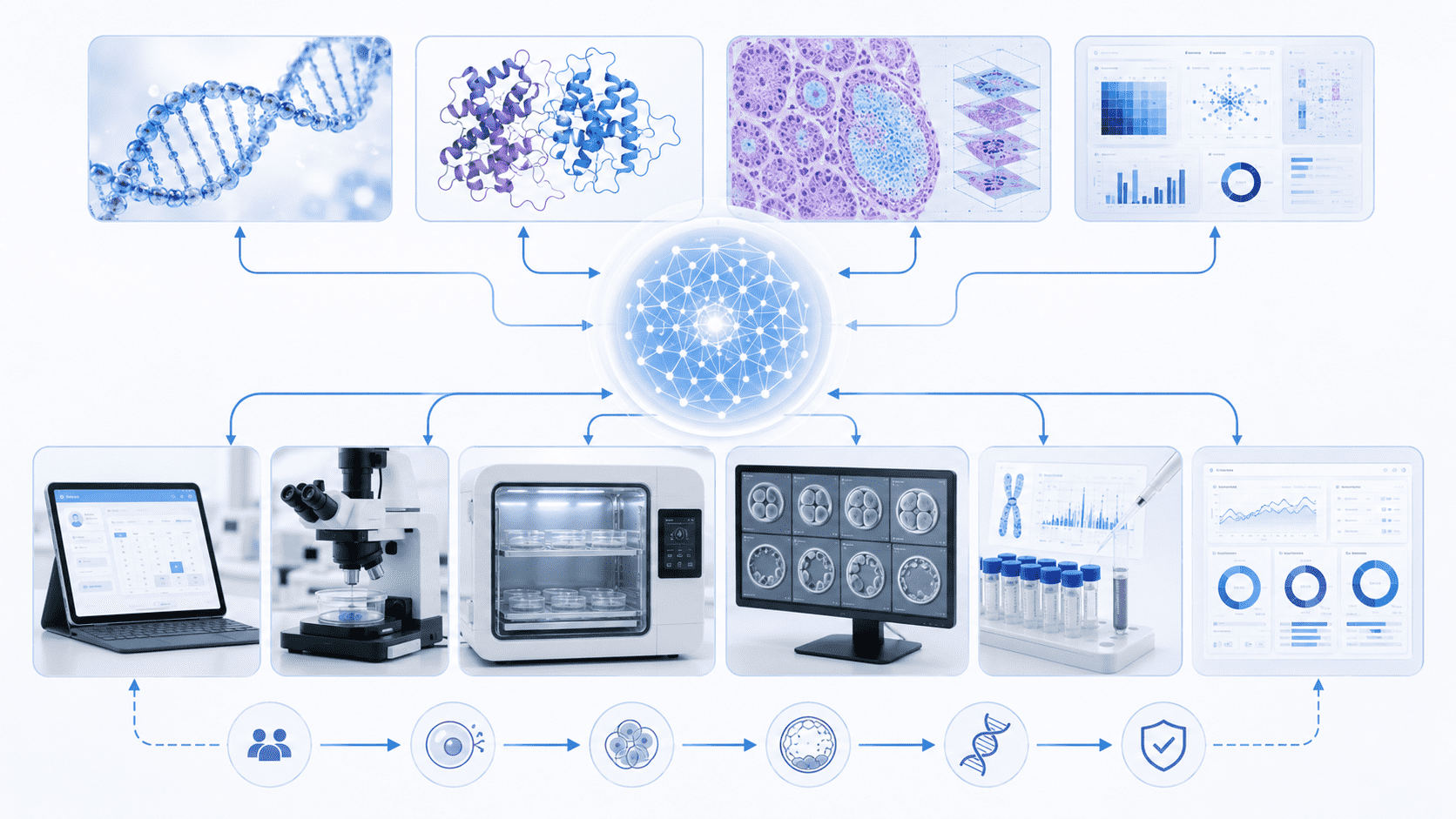
In genomics, proteomics, spatial biology, and biomedical analysis, many tasks can no longer be solved by a single model making one prediction. They often require first defining the goal, then selecting tools, reading results, checking for problems, and adjusting the next step based on intermediate findings. Large language models are moving from tools that simply “answer questions” toward agent systems that can participate in workflows. They do more than generate text: they break tasks into steps, call existing software, databases, or specialized models, interpret intermediate results, and prompt review when information is missing or results conflict. In assisted reproduction, the value of large language model agents should not be understood as directly replacing the decisions of physicians or embryologists. Rather, they can help multiple professional tools and laboratory records work together around the same cycle-level question, forming clearer, traceable, and reviewable evidence for decision support.
From Large Language Models to Agents
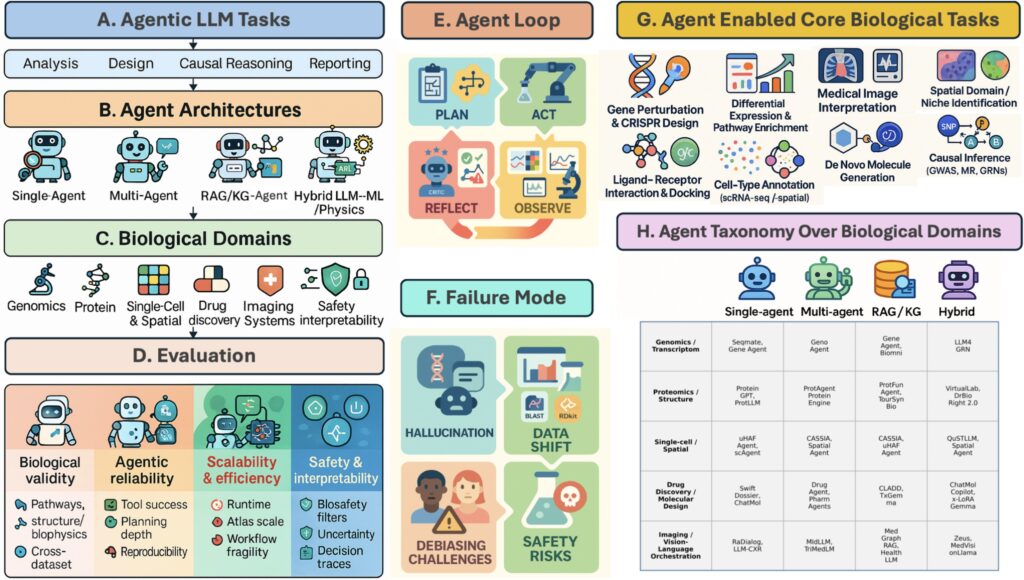
A conventional large language model is more like a question-answering tool: the user asks a question, and the model gives an answer. An agent, by contrast, is closer to a system with a workflow. It usually contains four parts. The first is a task objective: what problem needs to be solved. The second is a set of external tools, such as databases, statistical software, image models, or specialized analysis programs. The third is an iterative execution process, including planning, tool calling, result reading, error detection, and readjustment. The final part is the large language model itself, which is responsible for understanding the task, organizing the steps, and explaining the results.
Therefore, the key feature of an agent is not only that it can “speak,” but that it can “coordinate.” For example, when facing a complex analysis task, it should first determine what data and tools are needed, then call the appropriate programs, read the intermediate results, and decide whether the next step should be continued analysis, information supplementation, or manual review. It is not a “universal model” that replaces all specialized models, but rather an orchestration layer that organizes different tools. This definition is important: if an agent is described only as an information summarization tool, its real role in biological workflows will be underestimated.
Applications of Biology AI Agents
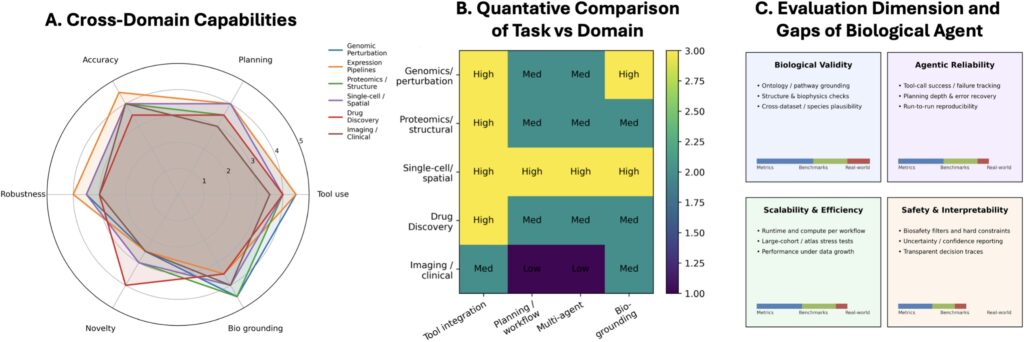
In bioinformatics and biomedical analysis, agents are being applied across multiple types of tasks. The first category is data analysis, such as sequencing workflows, gene set interpretation, single-cell annotation, spatial region identification, and medical image analysis. The second category is design and optimization, including CRISPR experimental design, protein structure engineering, candidate molecule screening, and drug discovery. The third category is mechanism interpretation, where agents integrate different data sources and propose possible regulatory relationships or biological hypotheses. The fourth category is report generation, which turns complex analysis processes into readable and checkable result summaries.
These tasks share one common feature: they often require multiple steps and multiple tools to work together. Within such workflows, agents can take on different roles. They may first plan the process, then call tools to execute specific steps, then check whether the results are reasonable, and finally generate explanations and reports. In more complex systems, a “checker” role can also be introduced to identify hallucinations, insufficient evidence, or abnormal tool outputs. In other words, an agent is not a single model, but a way of combining a large language model, external tools, professional knowledge, and checking mechanisms into one working system.
Application Pathways in Assisted Reproduction
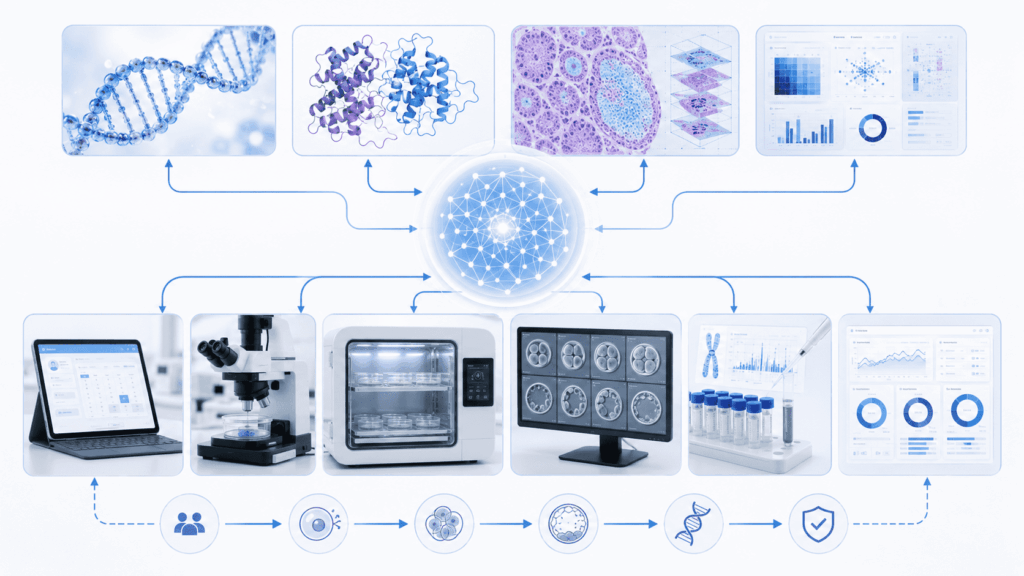
From this perspective, what deserves more attention in assisted reproduction is not whether a large model can directly grade embryos, but whether it can organize relevant tools and evidence around a cycle-level question. For example, when preparing for an embryo evaluation discussion, a large language model agent can first clarify the task objective, then call embryo image models, time-lapse culture records, laboratory observation records, and genetic testing results. It can read the intermediate information provided by these tools or systems and organize it into a reviewable evidence chain. It does not directly decide which embryo is most suitable for transfer. Instead, it helps embryologists and physicians see more quickly whether the current evidence is sufficient, whether different pieces of information support one another, whether there are missing or conflicting data, and which steps require further review.
Large language model agents can work in a similar way in patient communication, embryo documentation, and laboratory quality management. Based on workflows and knowledge bases confirmed by the center, an agent can organize cycle information needed for patient communication. It can also match image model outputs with manual observation records and flag areas requiring human confirmation. When laboratory indicators fluctuate, it can help call relevant records and support the formation of investigation pathways. The key point is not to “pass information from one department to another,” but to allow different tools to work in an ordered way around the same problem while preserving intermediate processes and evidence.
From Workflow Assistance to Trustworthy Implementation
The closer a large language model agent gets to real workflows, the more important traceability and reviewability become. Large models may generate information that does not exist, cite inappropriate materials, or fail to correctly read the results of external tools. In assisted reproduction, if embryo records, PGT correspondence, medication explanations, or image model outputs are misread, the impact is not merely a wording error; it may interfere with later communication and review.
Therefore, every key conclusion should be traceable back to original records, model outputs, or testing reports. Any content involving treatment plans, embryo selection, or transfer strategies must enter the review process of physicians and embryologists. When data are incomplete, image quality is poor, results conflict, or tool calling fails, the system should provide a review prompt rather than an overly certain recommendation. Only in this way can a large language model agent move from being a novel AI function to becoming a truly reliable laboratory workflow assistant.
Summary
The significance of biology-oriented large language model agents is not to let AI independently complete research or clinical decisions. Rather, it is to move large models beyond simple question answering and toward task planning, tool calling, result interpretation, and process review. For assisted reproduction laboratories, the value of this approach is not merely reducing information organization work. It lies in helping image models, laboratory records, genetic testing, medical records, and quality management tools work together around the same cycle-level question. Such agents cannot replace physicians in making treatment plans, nor can they replace embryologists in final embryo evaluation. However, they can help teams organize evidence more quickly, identify gaps, detect conflicts, and build traceable review pathways, allowing assisted reproduction AI to move from “a single model giving a result” toward “multiple tools collaboratively supporting a workflow.”